Simplifying Aquablation reimbursement & documentation
Updated: Sep 1, 2025
Streamlining Aquablation reimbursement doesn’t have to be complicated. With tools like proudP, collecting IPSS and Qmax data is faster, more reliable, and payer-ready—helping your team reduce paperwork while improving claim approval rates.
Ensuring a smooth reimbursement process for Aquablation therapy still starts with understanding—and meeting—Medicare and private payer documentation requirements. This post walks through the essentials so your team can reduce denials, streamline paperwork, and focus on patient care.

Medicare Coverage Criteria
Medicare considers Aquablation reasonable and necessary when performed once in patients who meet all of the following criteria:
Prostate volume 30–150 cc, confirmed by TRUS
Persistent moderate-to-severe symptoms despite maximal medical management, including:
IPSS ≥12
Qmax ≤15 mL/s with a voided volume >125 cc
Failure, contraindication, or intolerance to at least 3 months of conventional therapy (e.g., alpha-blockers, PDE5 inhibitors, 5-ARIs)
The procedure must be performed using an FDA-approved device
Medicare Limitations
Aquablation is not covered for patients with:
BMI ≥42 kg/m²
Suspected prostate cancer (unless biopsy confirms negative)
Significant bladder pathology or active infections
Inability to safely stop anticoagulation
Private Payer Considerations
Most major U.S. insurers also cover Aquablation, provided that medical necessity is clearly documented. Common requirements include:
Validated Symptom Scores: Pre- and post-procedure IPSS documentation
Uroflowmetry (Qmax): Peak flow rate reporting before and after treatment
Additional criteria: Prostate size limits, post-void residual thresholds, or evidence of prior medical therapy trials

Key Documentation for Reimbursement Success
Prior Authorization
Most payers require prior approval
Include IPSS, Qmax, TRUS volume, and relevant labs or imaging
In-Office Uroflowmetry
Standalone reimbursement may be limited
But documenting Qmax before and after therapy helps justify necessity and track outcomes
Consistent Follow-Up
Post-procedure IPSS and Qmax reinforce clinical value
Strengthens appeal cases if claims are denied
Streamlining Documentation with proudP
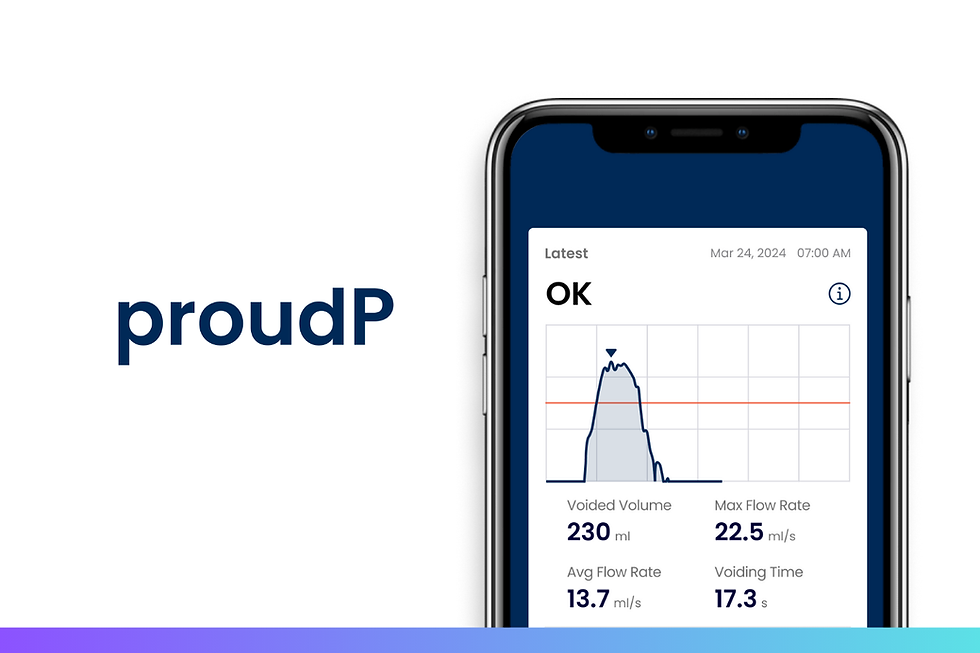
proudP is a digital uroflowmetry and symptom-tracking platform that simplifies payer compliance:
Reliable IPSS collection directly from patients
In-office and at-home Qmax data, integrated into one platform
Easy export of documentation for prior authorization and claims submission
By aligning your workflow with payer requirements and Medicare guidelines, proudP helps optimize patient access to Aquablation while reducing reimbursement challenges.
Final Thoughts
Aquablation is a powerful option for patients with moderate-to-severe BPH. With proper documentation, most patients can gain coverage. The key is consistency: record IPSS, Qmax, prostate volume, and medication history before submitting for approval.
If your practice has questions about coverage policies—or if you’re looking for ways to streamline uroflowmetry and documentation—proudP is here to support you.
Request free clinician access
We offer doctors and clinicians one month of unlimited access to proudP.
Review real test results
Try it yourself or with staff
Experience how easy it is to refer and review data
Build confidence before recommending to patients
FAQ
What are the Medicare coverage criteria for Aquablation?
Medicare covers Aquablation once per patient if all criteria are met: prostate volume between 30–150 cc confirmed by TRUS, IPSS ≥12, Qmax ≤15 mL/s with a voided volume >125 cc, and failure/intolerance of at least 3 months of conventional therapy. The procedure must use an FDA-approved device.
Which patients are excluded from Medicare coverage?
Aquablation is not covered for patients with BMI ≥42 kg/m², suspected prostate cancer (unless biopsy is negative), significant bladder pathology or active infections, or those unable to safely stop anticoagulants.
Do private insurers cover Aquablation?
Yes. Most major insurers cover Aquablation when medical necessity is documented. Requirements often include pre- and post-procedure IPSS, uroflowmetry (Qmax), and in some cases, prostate size or post-void residual thresholds.
What documentation is essential for reimbursement success?
Prior authorization is usually required, including IPSS, Qmax, prostate size by TRUS, and lab or imaging results. Consistent follow-up documentation—especially post-procedure IPSS and Qmax—helps justify medical necessity and strengthens appeals.
How can proudP help with Aquablation reimbursement?
proudP provides digital IPSS collection, in-office and at-home Qmax testing, and simple export of documentation for prior authorization and claims. This streamlines payer compliance and reduces administrative burden for providers.