
What are the stages of an enlarged prostate?
Updated: Jun 30, 2025
THE BIG PICTURE
Many men wonder how advanced their BPH (benign prostatic hyperplasia) might be. Is there Stage 1, Stage 2, Stage 3 BPH? How do doctors classify it, and how can you tell where you stand? In this article, we explain how BPH progression is typically assessed, how doctors measure its severity, and how you can get an early sense of your condition.

What is BPH?
BPH, or benign prostatic hyperplasia, refers to non-cancerous prostate enlargement. The prostate, normally the size of a walnut, grows larger with age. Unlike prostate cancer, BPH does not have an official staging system like Stage 1–4 cancer. Instead, physicians evaluate BPH based on prostate size, urinary symptoms, and complications.
What are the clinical grading stages of BPH?
While there’s no formal stage system, doctors often describe BPH as:
Mild (Early BPH): Occasional urinary symptoms; normal urine flow; prostate up to 30cc.
Moderate: Increasing urinary difficulties (weak stream, urgency, nocturia); prostate 30–80cc.
Severe: Persistent symptoms affecting daily life; possible urinary retention, bladder stones, or kidney issues; prostate may exceed 80–100cc.

What size of prostate is considered BPH?
A healthy prostate measures 20–30cc in younger men. Enlargement beyond 30cc suggests BPH, but symptoms don't always correlate directly with size.
How is BPH severity measured?
How is BPH measured?
Doctors use several diagnostic tools:
IPSS (International Prostate Symptom Score): Questionnaire scoring urinary symptoms 0–35.
Uroflowmetry: Measures urine flow strength.
Post-void residual (PVR): Checks urine left in bladder post-urination.
Ultrasound or MRI: Imaging tests to measure prostate volume.
Does PSA level mean I have BPH?
Not exactly. PSA (prostate-specific antigen) rises as the prostate enlarges but is not specific to BPH. Prostate cancer or infection can also raise PSA. PSA over 4ng/mL may prompt further evaluation, but elevated PSA alone does not confirm BPH.
How fast does BPH progress?
When should I be worried about BPH?
It really depends. Some men experience stable symptoms for years, while others see progression.
One thing to remember: BPH will not resolve on its own. Without treatment through medication, procedures, or lifestyle changes, symptoms can slowly get worse over time.
Concerning symptoms include:
Frequent nighttime urination (nocturia)
Weak or intermittent urine stream
Straining to urinate
Sudden inability to urinate (acute retention)
Blood in the urine
Is surgery the only option? Could it be treated with medication alone?
No. Many men manage BPH successfully with medications such as:
Alpha-blockers(e.g., tamsulosin): Relax prostate/bladder muscles.
5-alpha-reductase inhibitors (e.g., finasteride): Shrink prostate over time.
Surgery(TURP, HoLEP, Rezum, Aquablation) is reserved for severe or refractory cases. For many men, starting with medication and making a few lifestyle changes is enough to keep symptoms under control for years.
Do I Have to Take Medication for Life?
Not always. Some men can control symptoms for years with medication. Drugs like Flomax (tamsulosin) help relax the muscles around the prostate and bladder, making it easier to urinate, but they do not shrink the prostate itself.
If medications lose effectiveness, doctors may adjust treatment or recommend procedures.
What is the fastest way to shrink an enlarged prostate?
There is no instant fix, but some treatments work faster than others.
Medications: 5-alpha-reductase inhibitors(such as finasteride or dutasteride) take 3–6 months for full effect.
Procedures: Minimally invasive procedures (Rezum, laser therapy) often work faster than with traditional surgery.
Surgery: TURP or HoLEP remove tissue rapidly but involve more invasive recovery.
Can BPH go away on its own?
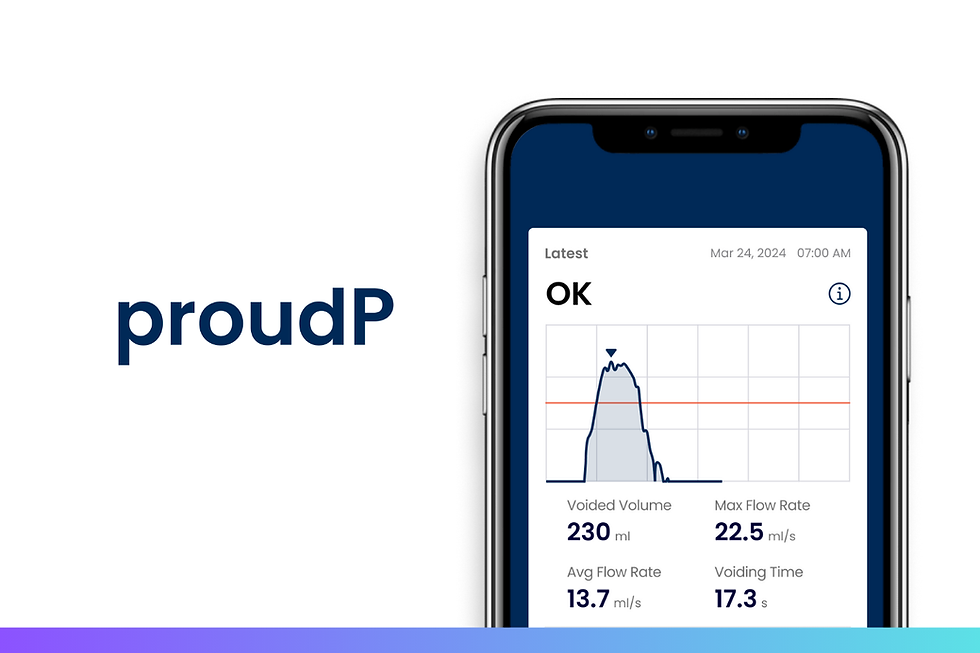
Unfortunately, no. BPH requires management. Lifestyle changes (reducing caffeine, bladder training) help symptoms but don’t shrink the prostate. If you feel discomfort when urinating, start with a simple self-check at home. With proudP, you can track your BPH symptoms right from your bathroom.
The Takeaways
BPH is classified by symptom severity, prostate size, and complications—not formal stages.
Prostate size over 30 cc suggests BPH.
IPSS, uroflowmetry, PVR, and imaging help doctors assess BPH.
PSA may rise with BPH but isn’t diagnostic alone.
BPH doesn’t resolve on its own but is very treatable.
How proudP Can Help You
Benign prostatic hyperplasia (BPH) is a common part of aging for many men. If you’re entering midlife and starting to feel changes in your urinary habits, proudP can help you understand what’s going on—from the comfort of your home.
Your urine flow tells a bigger story than you might think. proudP uses AI to assess your flow and deliver meaningful insights. Whether you're checking if your treatment is working, tracking your recovery after surgery, or trying to decide when it’s time to see a doctor—we’re here to support you.
FAQ
What size of prostate is considered enlarged?
A prostate larger than 30cc is typically considered enlarged, though size does not always directly correlate with symptom severity.
How is BPH severity usually measured?
Doctors use tools like the International Prostate Symptom Score (IPSS), uroflowmetry, post-void residual measurements, and imaging studies (ultrasound or MRI) to assess severity.
How fast does BPH usually progress?
BPH progression varies. Some men remain stable for years with mild symptoms, while others may experience steady worsening of urinary issues.
Does BPH increase PSA levels?
Yes, BPH can elevate PSA levels due to increased prostate volume, but elevated PSA isn’t specific to BPH alone and requires further evaluation.
Can lifestyle changes reverse BPH?
Lifestyle changes like reducing caffeine, limiting alcohol, and managing weight can help ease symptoms but do not shrink the prostate itself.
Sources
References.
Parsons JK et al. (2021). The natural history of lower urinary tract symptoms secondary to benign prostatic hyperplasia. Current Urology Reports. Link
Barry MJ et al. (2018). The American Urological Association Symptom Index for Benign Prostatic Hyperplasia. J Urol. Link
McVary KT et al. (2021). BPH Progression and Long-Term Risks. Urologic Clinics of North America. Link
Schroeck FR et al. (2019). Prostate Size and BPH Symptom Severity: Is There a Direct Correlation? Journal of Urology. Link
American Urological Association (AUA). BPH Management Guidelines. 2023 Update. Link
Roehrborn CG. (2022). Benign Prostatic Hyperplasia: Etiology, Pathophysiology, Epidemiology
Standards for Editorial Practice
Our mission is to transform healthcare for men of all ages, wherever they live and whatever their health history. We believe that starts with education to help us all understand our ever-changing bodies and health needs.
Our core values guide everything we do, including the standards we use to ensure the quality and trustworthiness of our content and editorial processes. We are committed to providing information that is up to date and based on evidence-based research and peer-reviewed journals.


