Is retrograde ejaculation after TURP permanent or temporary?
Updated: Sep 9, 2025
THE BIG PICTURE
When men undergo surgery for BPH—especially procedures like TURP—one of the most common concerns that comes up in the urologist’s office isn’t just about urinary flow. It’s about what happens to ejaculation afterward. Specifically: Is retrograde ejaculation permanent? Let’s break it down in plain language.

Is retrograde ejaculation after TURP permanent or temporary?
Does retrograde ejaculation go away after TURP surgery?
For many men, retrograde ejaculation after TURP is common—and often permanent. TURP removes tissue near the bladder neck where part of the ejaculatory mechanism sits. Once that tissue is altered, semen often flows backward into the bladder instead of exiting the penis.
Is retrograde ejaculation irreversible?
Yes. Studies suggest that 65–75% of men experience permanent retrograde ejaculation after TURP. The surgery mechanically changes how the bladder neck closes during orgasm. However, it’s important to know that sexual pleasure and orgasm usually remain intact, even without visible ejaculation.
Can retrograde ejaculation reverse on its own?
If retrograde ejaculation occurs after TURP, spontaneous reversal is rare. Unlike medication-induced retrograde ejaculation, which may resolve after stopping treatment, the surgical changes from TURP tend to be long-lasting.
Retrograde ejaculation related to alpha-blockers
Does tamsulosin cause retrograde ejaculation?
Yes. Tamsulosin(Flomax) relaxes the smooth muscles at the bladder neck to improve urine flow—but this same relaxation can allow semen to flow backward into the bladder.
Does ejaculation recover from tamsulosin?
In many cases, yes. Once tamsulosin is discontinued, normal ejaculation may return within days to weeks.
How long does it take for tamsulosin to get out of your system?
The half-life of tamsulosin is about 10–14 hours. Most of the drug clears your system within 2–3 days after stopping.
Which alpha blocker has the highest retrograde ejaculation?
Silodosin has the highest rate—up to 28% of men report retrograde ejaculation. Tamsulosin’s rate is lower, around 10–14%.
Does retrograde ejaculation go away after stopping silodosin?
Yes. In most cases, ejaculation returns within 1–4 weeks after stopping silodosin.
How long does it take to get rid of retrograde ejaculation after you stop treatment?
Usually within a few weeks, depending on the drug and individual response.
Mechanism & Physiology of Retrograde Ejaculation
What nerve damage causes retrograde ejaculation?
The sympathetic nerves controlling the bladder neck contraction can be affected during surgery or by medications. Disruption of this nerve pathway allows semen to enter the bladder instead of being propelled forward.
How does retrograde ejaculation leave the body?
The semen mixes with urine in the bladder. It is then expelled harmlessly when you urinate.
How to speed up nerve regeneration after prostate surgery?
While the body naturally attempts nerve healing, there’s no proven method to accelerate this process. Physical activity, pelvic floor exercises, and time are generally recommended.
Does retrograde ejaculation cause foamy urine?
Sometimes. If significant amounts of semen are expelled into the bladder, some men may notice slightly cloudy or foamy urine afterward.
Medical and Home Treatment Options for Retrograde Ejaculation
What can reverse retrograde ejaculation?
Some medications can make the bladder neck tighter, like pseudoephedrine (Sudafed). This can help some men who have problems ejaculating because of their medication. They are less effective for cases caused by TURP.

Can Viagra help with retrograde ejaculation?
Viagra(sildenafil) can improve erectile function but generally does not reverse retrograde ejaculation. Its effect is primarily on blood flow, not the bladder neck muscles.
How to treat retrograde ejaculation at home?
For most men, no treatment is necessary unless fertility is a concern. Techniques like collecting urine after orgasm can retrieve sperm for assisted reproduction if needed.
What You Can Do
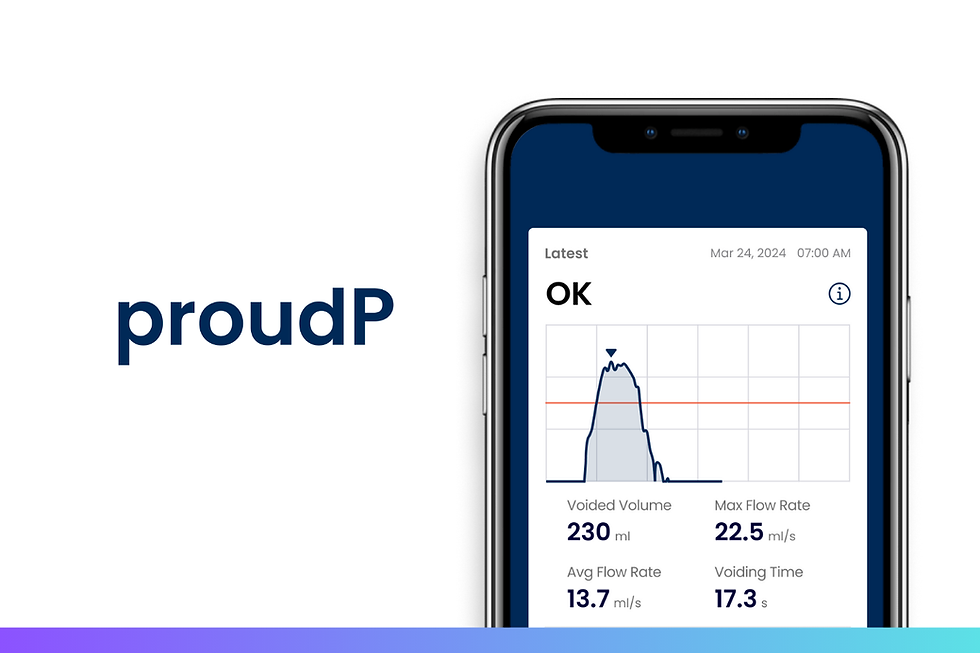
Thinking about prostate surgery? Or currently on medication? A simple self-test at home can help you stay on top of your symptoms. With proudP(home uroflowmetry), you can track your urinary flow and monitor whether your treatment is working. Understand if your meds are helping. Know when it might be time to consider surgery.
Check your prostate health with proudP.
Use code HELLO9 for 2 weeks free.
Key Takeaways
Retrograde ejaculation is a common and often permanent result of TURP.
Medication-induced retrograde ejaculation (e.g. from tamsulosin or silodosin) is usually reversible.
Retrograde ejaculation happens when semen flows into the bladder during orgasm instead of exiting the penis.
Although ejaculation is altered, sexual pleasure typically remains intact.
proudP helps you track urinary changes from home—helpful for both medical and surgical treatment planning.
FAQ
Is retrograde ejaculation after TURP permanent?
Yes, for most men it is. The surgery alters the mechanics of ejaculation.
Can ejaculation return after stopping tamsulosin or silodosin?
Yes. It typically resolves within a few days to a few weeks.
Does retrograde ejaculation affect sexual pleasure?
No. Orgasm usually remains intact, even without visible ejaculation.
Is there a treatment for TURP-related retrograde ejaculation?
Not reliably. Some medications may help if the cause is not surgical.
Can proudP help during BPH treatment?
Yes. proudP helps monitor urinary flow and treatment effectiveness from home.
References
Retrograde Ejaculation After TURP
Retrograde ejaculation occurs in 65–75% of men after TURP (Rassweiler et al., European Urology, 2021).
It is usually permanent due to irreversible changes at the bladder neck after resection.
Retrograde Ejaculation After Alpha-Blockers
Tamsulosin causes retrograde ejaculation in 10–14% of users (Roehrborn et al., Journal of Urology, 2022).
Silodosin has a higher incidence—up to 28% (Porpiglia et al., BJU International, 2022).
In most cases, retrograde ejaculation resolves within 2–4 weeks after stopping the medication.
Treatment Options
Pseudoephedrine may temporarily restore antegrade ejaculation in select cases, especially if nerve function is intact (AUA Guidelines, 2023).
References
National Institutes of Health (NIH) – Retrograde Ejaculationhttps://medlineplus.gov/ency/article/001286.htm
Urology Care Foundation – American Urological Association (AUA)Benign Prostatic Hyperplasia (BPH) Treatment Guidelineshttps://www.urologyhealth.org/urologic-conditions/benign-prostatic-hyperplasia-(bph)
Mayo Clinic – Retrograde Ejaculation Overviewhttps://www.mayoclinic.org/diseases-conditions/retrograde-ejaculation/symptoms-causes/syc-20377104
Drugs.com – Tamsulosin (Flomax) Side Effectshttps://www.drugs.com/sfx/tamsulosin-side-effects.html
PubMed – Silodosin-Induced Ejaculatory Dysfunctionhttps://pubmed.ncbi.nlm.nih.gov/20438558/
Uptodate – Evaluation and Management of Retrograde Ejaculationhttps://www.uptodate.com/contents/retrograde-ejaculation
WebMD – TURP Surgery and Sexual Side Effectshttps://www.webmd.com/men/prostate-enlargement-bph/transurethral-resection-prostate-turp
Cleveland Clinic – Retrograde Ejaculation: What You Need to Knowhttps://my.clevelandclinic.org/health/diseases/17670-retrograde-ejaculation
Standards for Editorial Practice
Our mission is to transform healthcare for men of all ages, wherever they live and whatever their health history. We believe that starts with education to help us all understand our ever-changing bodies and health needs. Our core values guide everything we do, including the standards we use to ensure the quality and trustworthiness of our content and editorial processes. We are committed to providing information that is up to date and based on evidence-based research and peer-reviewed journals.