
What if flomax stops working? Next treatment options
Updated: Sep 2, 2025
Many men with benign prostatic hyperplasia (BPH) start treatment with tamsulosin (Flomax®). For many, it helps improve urine flow, reduce nighttime trips to the bathroom, and ease the feeling of incomplete emptying.
But what if you’ve been taking tamsulosin for a while and your symptoms are creeping back—or never improved as much as you hoped? You’re not alone, and it doesn’t mean you’re out of options.
Why Tamsulosin May Stop Working
Tamsulosin isn’t a “cure.” Instead, it relaxes the muscles around the prostate and bladder neck to improve urine flow. Over time, however, the prostate can continue to grow, or the bladder may become weaker.
That means:
It’s not that your body gets “used to” the medication.
Rather, the condition itself progresses, and symptoms can return.
Some men also stop taking it because of side effects like dizziness, fatigue, or sexual changes.
Signs That It Might Be Time to Reassess
You might need to talk with your doctor about next steps if you notice:
Your urine stream has become weak again
You’re waking up two or more times at night (nocturia)
The feeling of incomplete emptying is worse
Daily life is affected despite regular medication
These are signals that medication alone may no longer be enough.
What Comes After Tamsulosin?
Other Medications
5-alpha-reductase inhibitors (5ARI) such as finasteride or dutasteride actually shrink the prostate.
Combination therapy (tamsulosin + a 5ARI) can work better for men with larger prostates.
Minimally Invasive Procedures
UroLift®: Tiny implants hold the prostate open, improving flow. Fast recovery, sexual function preserved.
Rezūm™ Water Vapor Therapy: Steam destroys excess prostate tissue. Outpatient, often under local anesthesia.
iTind™: A temporary device that reshapes the urethra, later removed.
Surgical Options
TURP (Transurethral Resection of the Prostate): The traditional “gold standard” surgery, but with longer recovery.
Aquablation®: A newer robotic waterjet procedure. Precise, minimally invasive, and designed to protect sexual function.
HoLEP (Holmium Laser Enucleation of the Prostate): Highly effective for very large prostate.
Talking With Your Doctor
There’s no single “best next step” for everyone. The right choice depends on:
Prostate size
Symptom severity
Age and overall health
Personal priorities (faster recovery, long-term durability, preserving sexual function)
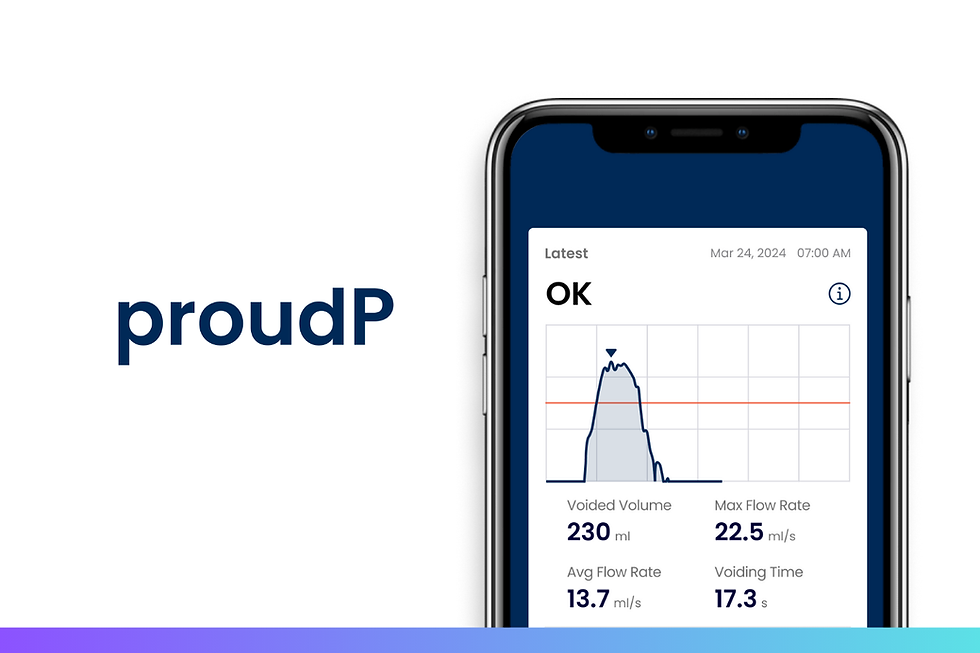
*Tip: Use tools like the proudP app to measure your urine flow at home. Bringing objective data to your urology visit makes it easier to decide whether medication is still helping—or if it’s time to consider a procedure.
Conclusion
If tamsulosin stops working, it doesn’t mean you’re stuck. BPH has a wide range of treatment options, from other medications to advanced procedures.
The key is to be open with your doctor about your symptoms, use data to track your progress, and know that you have choices to protect both your urinary health and quality of life.
Not sure if your medication is still helping?
Reference Collection
Michel MC, et al.Tamsulosin once daily: tolerability and efficacy in 6,507 patients with lower urinary tract symptoms due to BPH in routine practice.Eur Urol. 2001;39(5):367–375. PubMed
McConnell JD, et al.The long-term effect of doxazosin, finasteride, and combination therapy on the clinical progression of BPH.NEJM. 2003;349(25):2387–2398. NEJM
American Urological Association (AUA) GuidelinesManagement of Benign Prostatic Hyperplasia (BPH). 2021 Update. AUA Guidelines
Rezum™ Water Vapor TherapyPatient Resources: BPH Treatment Options.Boston Scientific. Rezum Patient Guide
Roehrborn CG, et al.The effects of dutasteride, tamsulosin, and combination therapy on lower urinary tract symptoms in men with BPH and prostate enlargement: 4-year results from the CombAT study.Eur Urol. 2010;57(1):123–131.PubMed
Gravas S, et al.EAU Guidelines on the Management of Non-neurogenic Male LUTS, incl. BPH.European Association of Urology. 2023. EAU Guidelines
McVary KT, et al.Update on AUA guideline on the management of BPH.J Urol. 2011;185(5):1793–1803. PubMed
FAQ
Q: How do I know if tamsulosin has stopped working?
If your urinary symptoms return or worsen despite daily use, it may be time to discuss other treatments.
Q: Should I increase my dose of tamsulosin?
Tamsulosin is usually prescribed at a fixed dose (0.4–0.8 mg). Don’t change it without medical advice.
Q: What are alternatives if Flomax doesn’t work?
Other medications (like 5ARIs), minimally invasive procedures (Rezūm, UroLift), or surgeries (TURP, Aquablation) are options.
Q: Is surgery the only option after tamsulosin?
No. Many men benefit from less invasive procedures before surgery is considered.
Q: Can I combine tamsulosin with other medications?
Yes, sometimes tamsulosin is combined with finasteride or dutasteride for added benefit in men with larger prostates.
Standards for Editorial Practice
Our mission is to transform healthcare for men of all ages, wherever they live and whatever their health history. We believe that starts with education to help us all understand our ever-changing bodies and health needs. Our core values guide everything we do, including the standards we use to ensure the quality and trustworthiness of our content and editorial processes. We are committed to providing information that is up to date and based on evidence-based research and peer-reviewed journals.


