
Can you take BPH and blood pressure meds together?
My Father’s Story
My father is 74 years old. He was diagnosed with benign prostatic hyperplasia (BPH) about six months ago and has been taking medication ever since. A few weeks ago, however, he suddenly felt dizzy due to a side effect called orthostatic hypotension—a sudden drop in blood pressure when standing up. He lost his balance and hit his head against the corner of the refrigerator. Thankfully, it wasn’t a serious injury, but that incident made me approach the topic of BPH medications much more seriously.
BPH is a common part of aging and often appears around the same time as hypertension. That’s why many men in their 50s to 70s end up taking medications for both conditions. In this situation, knowing exactly what type of medication you’re on is crucial for your safety.
As a writer for the proudP blog, I hope this article gives men like my father—and their families—the clarity and confidence they need to feel safer on their treatment journey.

The Main Types of BPH Medications
BPH medications fall into three main categories:
Alpha-blockers
These relax the muscles in the prostate and bladder, making it easier to urinate.
Non-selective alpha-blockers (doxazosin, terazosin): Affect both the prostate and blood vessels, lowering blood pressure. When combined with hypertension drugs, they can cause dizziness or fainting.
Selective alpha-blockers (tamsulosin, alfuzosin, silodosin): Target the prostate more specifically, with less effect on blood pressure, though caution is still needed when combined with other medications.
5-alpha-reductase inhibitors (finasteride, dutasteride)
Shrink the prostate over time, reducing urinary symptoms.
They have little to no impact on blood pressure.
Often prescribed for long-term use because the benefits appear gradually.
PDE5 inhibitors (tadalafil, others)
Originally developed for erectile dysfunction, but also improve urinary symptoms in some men.
Because they widen blood vessels, they can lower blood pressure.
When combined with alpha-blockers or blood pressure drugs, they can lead to dangerously low blood pressure.
How These Medications Interact with Blood Pressure Drugs
Blood pressure medications on their own (such as diuretics, ACE inhibitors, beta-blockers, calcium channel blockers) don’t usually conflict directly with BPH drugs. The concern arises when multiple medications that lower blood pressure are taken together.
Alpha-blockers + hypertension drugs → higher risk of dizziness, fainting, or falls due to low blood pressure.
PDE5 inhibitors + hypertension drugs → blood pressure may drop suddenly and severely.
These risks are especially concerning at night, when men get up to use the bathroom. A dizzy spell in the dark can easily lead to a dangerous fall.
What Every Patient Should Remember
Know the name and type of your medication. Don’t just take the pill—understand what category it belongs to.
Always tell your doctor or pharmacist about all the medications you’re taking. This prevents harmful drug interactions.
Pay attention to warning signs such as dizziness, blurred vision, or sudden fatigue. They may indicate a blood pressure drop.
Share your medication list with family. In an emergency, this information can be life-saving.
In Closing
For men living with BPH, medication is often a long-term journey.But taking pills is not the whole story.
It’s just as important to pay attention to whether the medication is truly working for you. This is a long road, and if symptoms don’t improve, we may need to consider other options.
That’s why measuring treatment effectiveness matters.Feeling better is one thing—but objective data tells the real story.
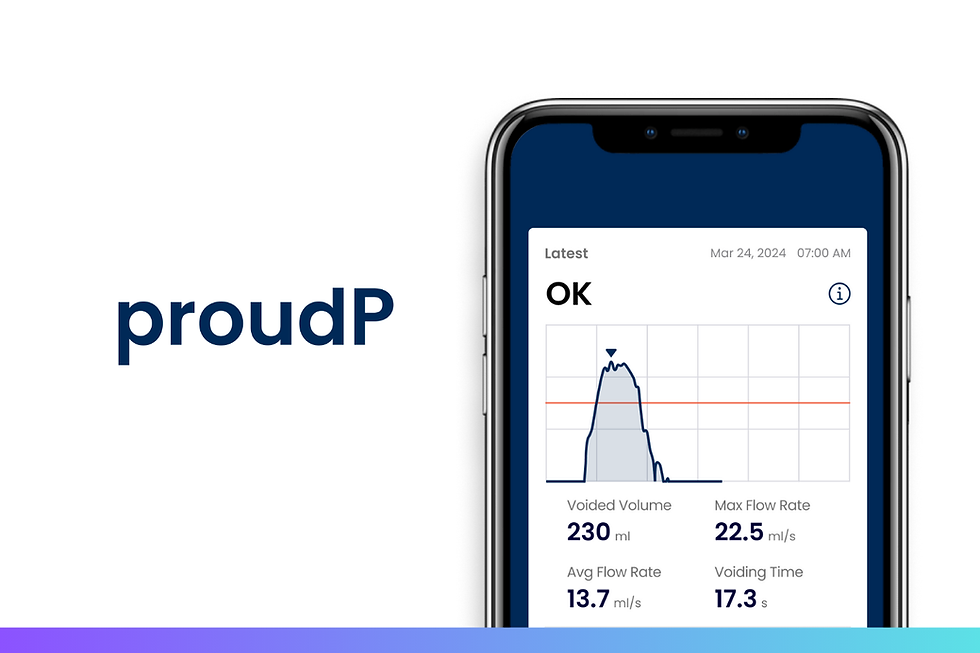
proudP uses your smartphone to measure urine flow speed, giving you clear numbers before and after treatment. This isn’t just a tech gimmick: proudP is already being used in real clinics, and urologists recommend it to their patients. Install the app on your phone and make it your bathroom companion. You may be surprised at how reliable a friend it can be.
I wish for the health and peace of everyday life for all fathers.May your days be steady, safe, and full of strength. 🙏
References.
Roehrborn CG. Benign prostatic hyperplasia: an overview. Rev Urol. 2005;7(Suppl 9):S3–S14.
McConnell JD, Roehrborn CG, Bautista OM, et al. The long-term effect of doxazosin, finasteride, and combination therapy on the clinical progression of benign prostatic hyperplasia. NEJM. 2003;349:2387–2398.
Kirby RS, Roehrborn C, Boyle P, Bartsch G, Jardin A, Cary MM. Efficacy and tolerability of doxazosin and finasteride, alone or in combination, in treatment of symptomatic benign prostatic hyperplasia. BMJ. 2001;322(7280):919–922.
Lepor H. Alpha blockers for the treatment of benign prostatic hyperplasia. Rev Urol. 2007;9(4):181–190
American Urological Association (AUA). Guideline: Management of Benign Prostatic Hyperplasia (BPH). 2023.
FAQ: BPH Medications and Blood Pressure
Q1. Can BPH medications affect my blood pressure?
Yes. Some alpha-blockers used for BPH can also lower blood pressure. This can increase the risk of dizziness or fainting, especially when combined with blood pressure medications.
Q2. Which BPH medications are safest if I also have hypertension?
Selective alpha-blockers such as tamsulosin tend to have less impact on blood pressure compared to non-selective ones like doxazosin or terazosin. However, you should always consult your doctor before starting or changing medications.
Q3. Do 5-alpha-reductase inhibitors (finasteride, dutasteride) affect blood pressure?
No. These drugs mainly shrink the prostate and do not significantly impact blood pressure.
Q4. What about PDE5 inhibitors like tadalafil?
Tadalafil can lower blood pressure. When combined with alpha-blockers or blood pressure medications, it can sometimes cause dangerously low blood pressure.
Q5. How can I know if my BPH medication is working?
Symptom relief is important, but objective measurements are even more reliable. Tools like proudP allow you to measure your urine flow speed with your smartphone, so you can see clear before-and-after results.
Q6. Should I share my medication list with family members?
Yes. In case of an emergency, it’s helpful if your family knows what medications you take. It also makes it easier to provide accurate information to doctors quickly.


